Chocolate Ganache Ratios for Every Texture
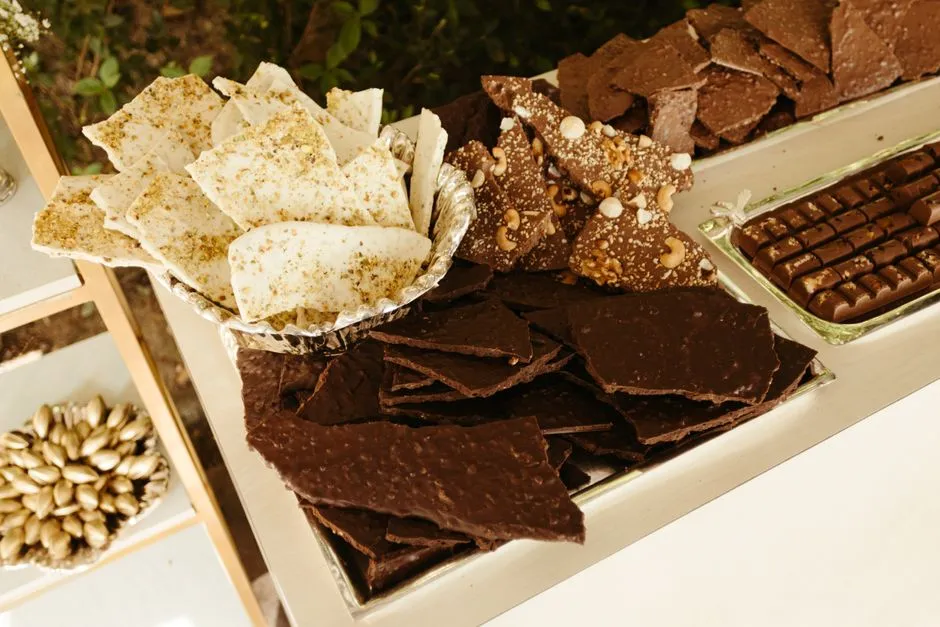
- What ratio makes chocolate ganache?
- Use this dark-chocolate ratio chart
- Scale any ganache batch with one formula
- Choose chocolate before choosing the ratio
- Make a 400 g all-purpose ganache
- Watch the emulsion form
- Match the temperature to the job
- Fix ganache by diagnosing the symptom
- Add flavors without losing control
- Store cream ganache as a perishable food
- Keep a ratio card for the next batch
- Sources
What ratio makes chocolate ganache?
For a dark or semisweet chocolate ganache, start with equal weights of chocolate and heavy cream for a soft, pourable glaze. Use 3 parts chocolate to 2 parts cream for a filling that moves from pourable to spreadable as it cools, or 2 parts chocolate to 1 part cream for a firmer center. Chocolate type, cocoa percentage, temperature, and brand change the set, so make a small test before covering the cake.
Ganache is an emulsion: tiny droplets of water from the cream are dispersed through cocoa fat and milk fat. The ratio chooses the neighborhood. Careful mixing and temperature decide whether you actually arrive there.
Use this dark-chocolate ratio chart
These formulas are starting points for dark or semisweet chocolate, calculated by weight.
| Use | Chocolate | Heavy cream | Example batch | Texture after cooling |
|---|---|---|---|---|
| Thin glaze or drip | 1 part | 1 part | 200 g + 200 g | Pourable warm, soft when chilled |
| General filling or frosting | 3 parts | 2 parts | 300 g + 200 g | Pourable warm, spreadable cool, scoopable chilled |
| Firm truffle-style center | 2 parts | 1 part | 300 g + 150 g | Thick when cool and firm when chilled |
The middle formula matches King Arthur Baking's tested 2 parts cream to 3 parts chocolate all-purpose ratio, stated there as cream to chocolate. This table reverses the order to chocolate to cream, so 3:2 means the same thing.
The 1:1 starting point follows King Arthur's simpler example of 8 ounces chocolate with 8 ounces hot cream, described as easily pourable and very soft when set. Its current ganache recipe also pairs 227 g cream with 283 g to 454 g semisweet or bittersweet chocolate, showing how more chocolate produces a thicker result.
Do not convert the chart to cups by treating cream and chopped chocolate as equally dense. They are not. Weigh both ingredients.
Scale any ganache batch with one formula
Choose the total amount you need, then divide by the sum of the ratio parts.
For 450 g of 3:2 ganache:
- Add the parts: 3 + 2 = 5.
- Divide the target by 5: 450 ÷ 5 = 90 g per part.
- Chocolate is 3 parts: 3 × 90 = 270 g.
- Cream is 2 parts: 2 × 90 = 180 g.
- Check the total: 270 + 180 = 450 g.
For 300 g of 2:1 ganache, each part is 300 ÷ 3 = 100 g. Use 200 g chocolate and 100 g cream.
For 250 g of 1:1 ganache, split the total in half: 125 g chocolate and 125 g cream.
The arithmetic scales cleanly. Pan shape, room temperature, and cooling time do not. A deep 900 g bowl will cool more slowly than a shallow 300 g batch, so judge texture rather than multiplying a waiting time.
Choose chocolate before choosing the ratio
Chocolate is not one standardized solid. Cocoa solids, cocoa butter, sugar, milk solids, emulsifiers, and added fats all change how much liquid the mixture can hold and how it sets.
Dark and semisweet chocolate
Use the chart as the first test. Record the cocoa percentage and product name, not only “dark.” A 55% bar and an 85% bar can behave differently at the same ratio.
Milk chocolate
Milk chocolate contains more sugar and milk solids and generally needs more chocolate relative to cream for a comparable set. King Arthur's tested chip method uses 1 part cream to 3 parts milk chocolate by weight. Treat 3:1 as a product-specific starting point, then test the exact chocolate before committing a full dessert.
White chocolate or flavored baking chips
White chocolate contains cocoa butter but no cocoa solids; compound or flavored chips may use other fats. Do not assume the dark-chocolate chart transfers. King Arthur groups milk chocolate and baking chips at 1 part cream to 3 parts chips in its particular test. Follow an exact product recipe when a clean set matters.
Chips, bars, wafers, and couverture
Small, even pieces melt more predictably. Chips may be formulated to hold their shape in baking, while couverture and bars vary in cocoa butter and solids. A familiar chip is useful for a repeatable family cake. A fluid couverture may be better for a polished glaze. Neither label eliminates the need for a test.
If you are shopping for shaped chocolate rather than a cream-based filling, the beginner chocolate-mold guide covers a different project.
Make a 400 g all-purpose ganache
This 3:2 batch makes 400 g, enough for a modest cake filling, a spreadable top, or a controlled practice batch.
Ingredients
- 240 g dark or semisweet chocolate, chopped evenly
- 160 g heavy cream
- optional: a small pinch of fine salt
Method
- Put the chopped chocolate in a completely dry, heat-safe bowl.
- Heat the cream in a small saucepan until it is steaming and just beginning to show movement at the edge. Do not walk away from the pan.
- Pour all the hot cream over the chocolate. Make sure the pieces are mostly submerged.
- Leave the bowl undisturbed for 5 minutes. King Arthur uses the same five-minute rest in its current recipe.
- Begin stirring in small circles at the center with a dry flexible spatula. Widen the circles gradually as the center turns dark, smooth, and shiny.
- Scrape the bottom and sides once the emulsion is established. Add salt if using.
- Use it warm for a thick pour, let it cool for spreading, or cover and chill it for a firmer texture.
Hot cream and the bowl can burn. Keep the handle turned inward, use a stable work surface, and keep children clear of the hot pan. If using a microwave for brief reheating, use a microwave-safe bowl and stir between short bursts; do not heat a sealed container.
Watch the emulsion form
The mixture often looks worse before it looks finished. The center may begin as a dark, elastic pool surrounded by streaks. Continue controlled stirring from the center rather than beating air through the whole bowl.
A finished ganache should be uniform, glossy, and free of oily puddles or grainy streaks. A stick blender can create a fine emulsion, but keep its head submerged to avoid adding bubbles. Follow the blender's hot-liquid and container instructions.
Do not add cold butter, flavoring, or extra cream before the basic emulsion is stable. Each addition changes the balance. Master the two-ingredient batch first, then record additions by weight.
Match the temperature to the job
The ratio does not describe texture without temperature.
- Warm: fluid enough to glaze, drip, or pour.
- Cool room temperature: thicker and suitable for spreading or piping, depending on ratio and chocolate.
- Chilled: firm and scoopable; a high-chocolate ratio may become too hard to spread.
- Gently rewarmed: returns toward a pourable state, provided the emulsion remains intact.
Test a spoonful on a cold plate or the side of a practice cake. If it runs straight to the bottom, wait. If it drags and tears the surface, warm it gently or adjust only after diagnosing the cause.
Chocolate bark behaves differently because it is mostly chocolate rather than cream emulsion. Use the separate easy chocolate bark recipe when you want a crisp slab.
Fix ganache by diagnosing the symptom
It is smooth but too thin
First, wait for it to cool. Warm ganache is supposed to flow. If the cooled batch remains thinner than the project needs, melt a measured amount of the same chocolate separately, then blend it in gradually. Record the new total so the successful ratio can be repeated.
It is smooth but too thick
Warm it gently. If it is still too thick at the intended working temperature, add a small measured amount of warm cream and emulsify completely before adding more. An unmeasured splash makes the result hard to reproduce.
It looks oily or split
Stop adding fat. Warm the mixture gently if it has become cold and lumpy, then use slow center-out stirring or a submerged stick blender. A small amount of warm cream may help rebuild the emulsion, but add it in measured increments. If the chocolate scorched or water entered unpredictably, repurpose the batch in a dessert where perfect texture is not essential rather than promising a full recovery.
It contains unmelted pieces
The cream may have been too cool, the pieces too large, or the bowl too cold. Reheat very briefly and stir. King Arthur advises brief low-temperature reheating for remaining hard pieces. Direct high heat can scorch chocolate or overheat the emulsion.
It has bubbles
Stir more slowly, keep a blender submerged, and let the bowl stand before pouring. For a mirror-smooth finish, pass the warm ganache through a fine sieve without pressing foam through it.
Add flavors without losing control
Begin with additions that do not bring much extra water: vanilla extract, espresso powder dissolved in the cream, finely grated citrus zest, or a small measured amount of liqueur. Allergens and alcohol remain present in the finished mixture; label and serve accordingly.
Fruit puree, juice, plant milk, reduced-fat dairy, honey, and butter each change water, sugar, and fat. They are not one-for-one cream substitutes. Use a formula developed for that ingredient, especially for molded chocolates or candies stored beyond immediate home service.
If serving people with food allergies, check the chocolate, cream, flavorings, decorations, and shared equipment. Milk, soy, nuts, peanuts, wheat, and sesame may appear in products or cross-contact statements. A dark label does not automatically mean dairy-free.
Store cream ganache as a perishable food
Ganache contains cream, so this home guide treats it as perishable. Cover it and refrigerate at 40°F (4°C) or below within 2 hours of preparation, or within 1 hour when the surrounding temperature is above 90°F (32°C), following current FoodSafety.gov chilling guidance.
For a conservative home plan, use refrigerated ganache within 3 to 4 days or freeze it within that window. Professional confection formulas may carry validated longer storage based on water activity, sugar, process, packaging, and temperature; do not transfer that shelf life to an improvised home formula.
Rewarm only the amount needed, gently. Discard ganache left beyond the time-temperature limit, showing mold, or contaminated by a used utensil. Smell and appearance cannot prove that mishandled dairy is safe.
Keep a ratio card for the next batch
Write down:
- chocolate brand, type, and cocoa percentage;
- chocolate and cream weights;
- any additions by weight;
- bowl and batch size;
- room and storage conditions;
- texture warm, cool, and chilled;
- the final use and whether it held.
After one or two batches, that card is more useful than a universal promise. Ganache becomes calm work when ratio, product, and temperature are recorded instead of remembered approximately.